 Agencies
 E-com brands
 Coaches and creators
 Scrape
 Brands
 Radar
 Hooks
 Scripts
 History
The Best Amazon Review Analysis Tools in 2026

By Daniel, founder of Adlicio · Updated Oct 10, 2026 · 8 min read
On this page
- The 7 tools compared
- 1. Amazon "Customers say": the free first look
- 2. Adlicio: complaints and customer language for ads
- 3. Jungle Scout: review summaries for sellers
- 4. Helium 10: review topics in a Chrome extension
- 5. VOC.AI: ranked pain points per product
- 6. Apify: raw reviews to a spreadsheet
- 7. Bright Data: raw reviews at scale
- What about Fakespot and ReviewMeta?
- Which one should you pick?
- FAQ
Short answer: the best Amazon review analysis tools in 2026 are Amazon's own "Customers say" summary for a free first look, Adlicio for turning complaints into ad angles and customer language, Jungle Scout or Helium 10 if you already sell on Amazon, VOC.AI for ranked pain points per product, and Apify or Bright Data if you want the raw reviews in bulk.
Amazon reviews are the densest source of what buyers expect and what lets them down: paid, verified customers writing in their own words. The right tool depends on the job. Some summarize, some sit inside a seller suite, and some only hand you the data.
How we checked: Adlicio publishes this list and is one of the tools on it, so here is exactly what we did. We ran Adlicio on a real product, the Instant Pot Duo, and show the result below. For the other six tools we read each product page, help docs and pricing page, and took every screenshot ourselves on October 10, 2026. We did not buy their paid plans, so we give a verdict for each tool but no star ratings. Prices were checked on each tool's own site on September 28, 2026, and each tool is linked so you can verify.
The 7 tools compared
| Tool | Best for | Free option | Paid from |
|---|---|---|---|
 Amazon "Customers say" | A free AI summary on the product page | Yes, on the page | Free |
 Adlicio | Complaints and buyer language for ads, with the quotes behind them | Free analyzer | From $49/mo |
 Jungle Scout | Sellers who want review summaries next to product research | No (7-day money-back) | $79/mo |
 Helium 10 | Sellers who want review topics and trends in a Chrome extension | Free plan, without Review Insights | $129/mo |
 VOC.AI | Ranked pain points and a side-by-side of two products | 3 free analyses | $99/mo |
 Apify | Raw reviews to CSV or JSON, no analysis | $5 of usage a month | $6 per 1,000 reviews |
 Bright Data | Raw reviews at scale through an API | 5,000 records a month | $1.50 per 1,000 records |
1. Amazon "Customers say": the free first look
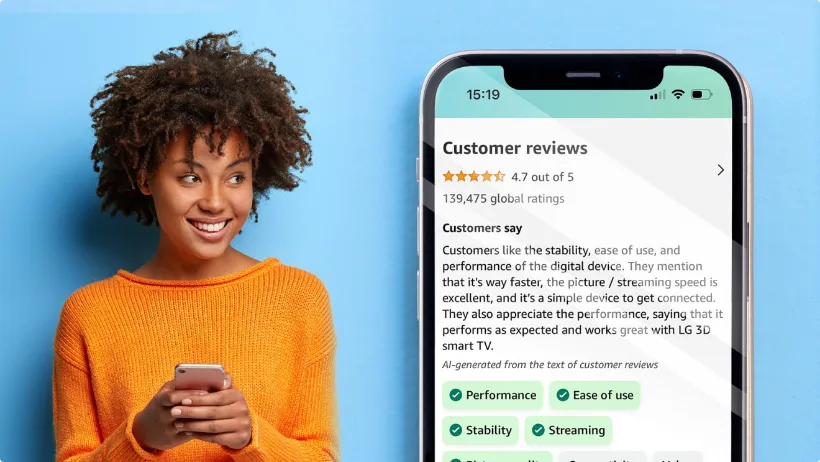 Amazon's AI review highlights, as shown in Amazon's own announcement. Screenshot: October 10, 2026.
Many Amazon product pages now show a "Customers say" paragraph written by AI from the review text, plus tags with mention counts such as "Sound quality (16.5K)". It uses verified-purchase reviews only.
Pros: free; right on the product page; built from verified purchases only.
Cons: a short summary you cannot export, filter by star rating or trace back to the reviews behind each point. Amazon does not say which products or countries have it.
Price: free.
Verdict: the best first read of one product. Move to a real tool when you need the quotes.
2. Adlicio: complaints and customer language for ads
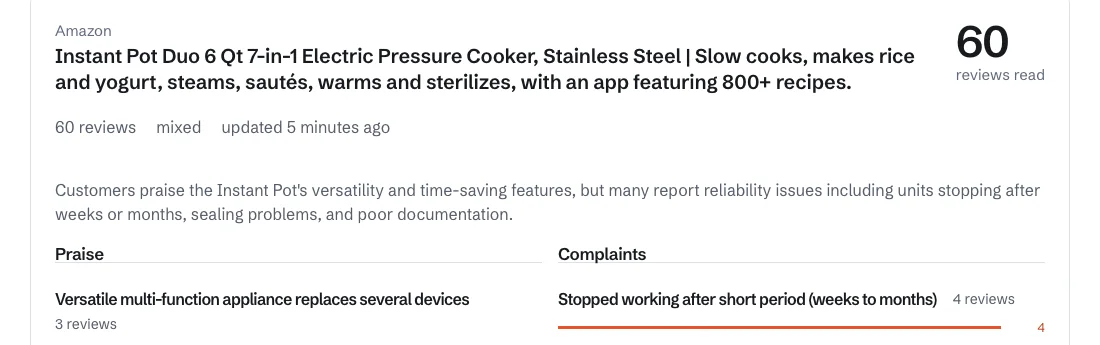 Adlicio's free Amazon review analyzer on the Instant Pot Duo: praise and complaints with the reviews behind each theme. Run on October 10, 2026.
Adlicio's free Amazon review analyzer reads a live sample of a product's public reviews and groups what buyers praise and complain about, with the linked reviews behind each theme. On the Instant Pot Duo it read 60 reviews and led the complaints with units that stopped working after weeks or months, sealing ring problems and a missing manual.
For a full pull, ask in Claude or ChatGPT through the Adlicio MCP server, or use the web app. Adlicio ranks the complaints, objections and buyer phrases, and it works the same way on Google Maps, Trustpilot, Reddit and 25+ other sources. In our longer test, Claude pulled 402 Instant Pot reviews through Adlicio and ranked the complaints, led by "won't seal or build pressure". The full example is in how to analyze competitor reviews for ad angles.
Pros: every theme links to the real reviews; the same workflow covers competitors and 30 sources, not only Amazon; works inside Claude and ChatGPT.
Cons: built for marketing research, so there are no sales estimates, keyword data or listing tools, which Jungle Scout and Helium 10 include.
Price: the analyzer is free. Paid plans start at $49 a month (Starter, 250 credits); an Amazon pull costs 0 to 2 credits, depending on whether the reviews come from our archive, the public page or a live pull.
Verdict: the pick for ad angles, landing page copy and positioning, where the exact customer words matter.
3. Jungle Scout: review summaries for sellers
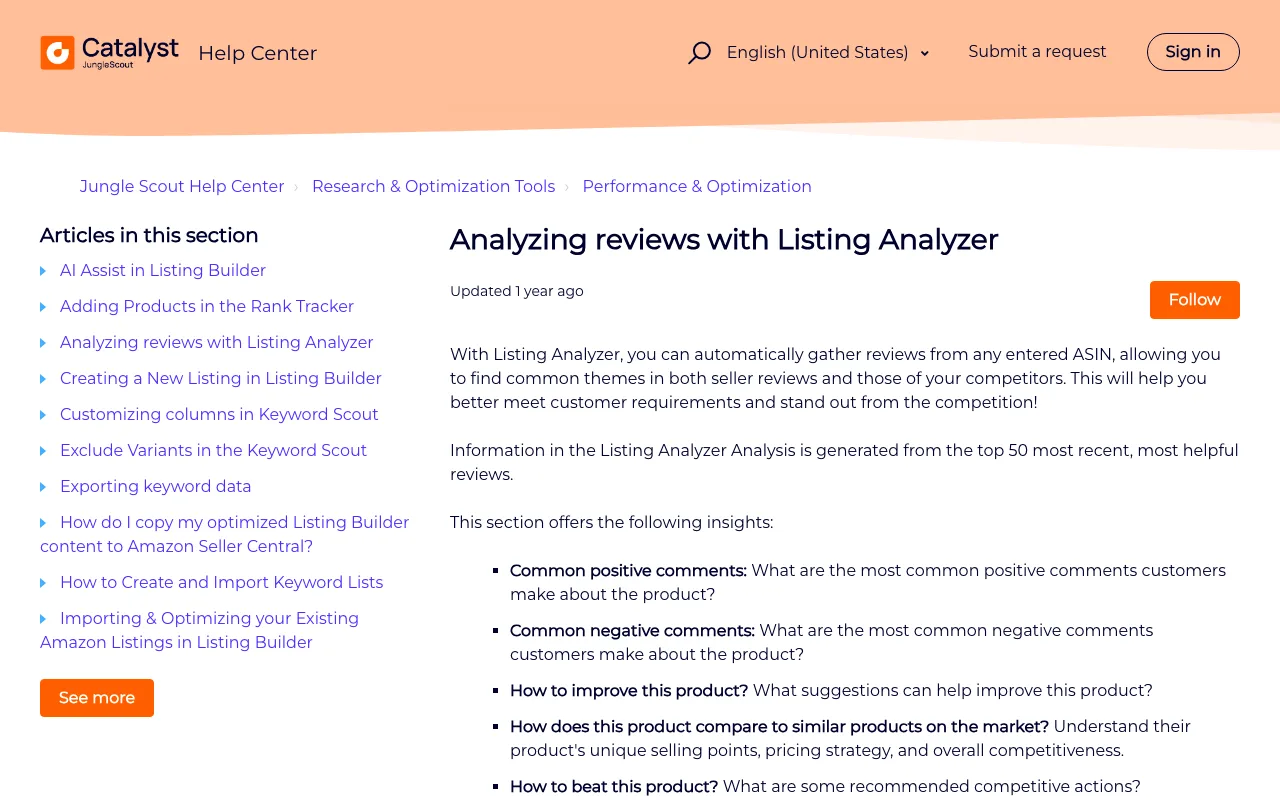 Jungle Scout's help article for review analysis in Listing Analyzer. Screenshot: October 10, 2026.
Jungle Scout's Listing Analyzer gives an AI summary of the 50 most recent, most helpful reviews on any ASIN: common praise, complaints, fixes, how it compares and ideas for how to beat the product.
Pros: sits next to Jungle Scout's product, keyword and sales data; works on any ASIN, yours or a competitor's.
Cons: 50 reviews is a small sample, and there is no free trial (a 7-day money-back guarantee instead).
Price: from $79 a month on Growth Accelerator, with 50 analyses a month. A broader listing and review analysis feature comes with Brand Owner + CI at $149 a month.
Verdict: worth it if you already pay for Jungle Scout. Not worth buying for review analysis alone.
4. Helium 10: review topics in a Chrome extension
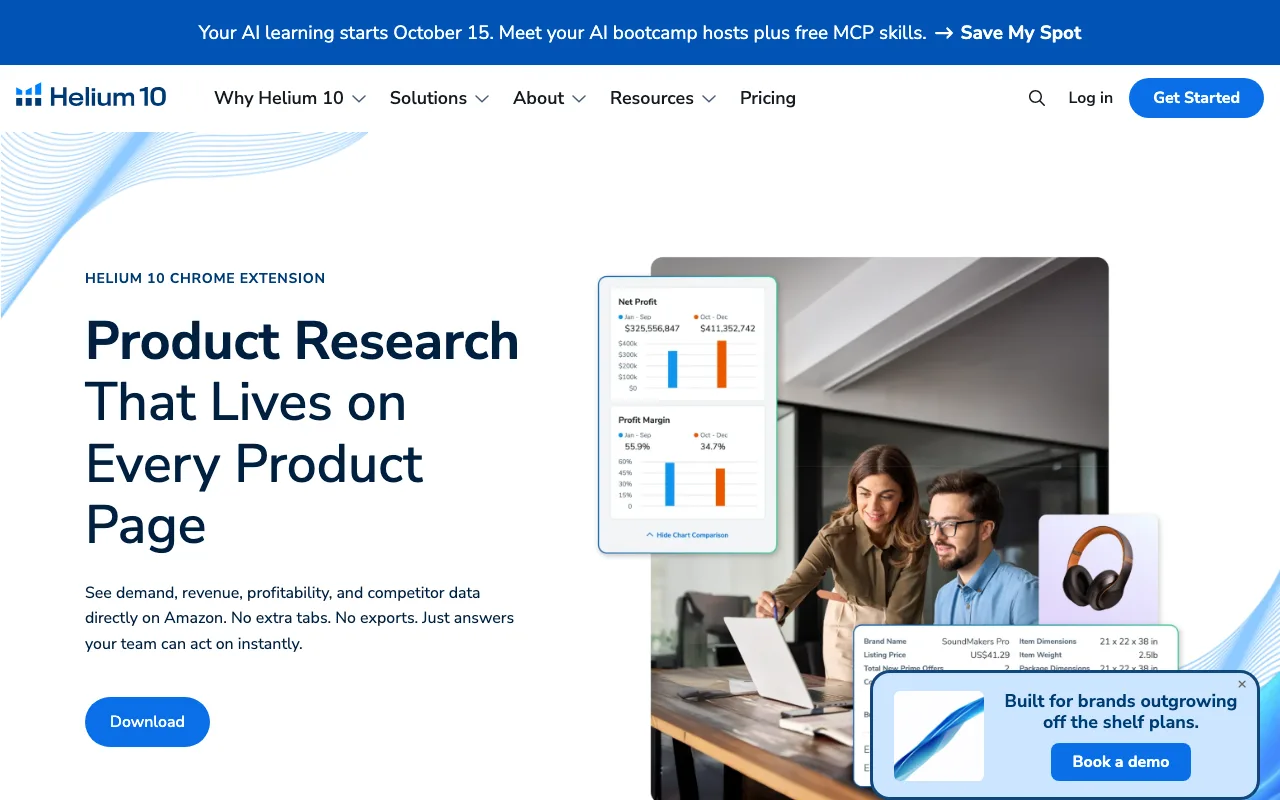 Helium 10's Chrome extension page. Review Insights runs inside this extension. Screenshot: October 10, 2026.
Helium 10's Review Insights works from its Chrome extension on any Amazon product page. It shows the top positive and negative topics, how often each is mentioned, their effect on the star rating, 6-month trends and a CSV export.
Pros: trends over 6 months; shows how much each topic moves the star rating; CSV export.
Cons: covers 7 Amazon marketplaces (US, UK, France, Italy, Germany, Spain, Japan), and it is priced as part of a full seller suite.
Price: Review Insights needs the Platinum plan at $129 a month. The free plan does not include it.
Verdict: the strongest review analysis inside a seller suite, at a seller-suite price.
5. VOC.AI: ranked pain points per product
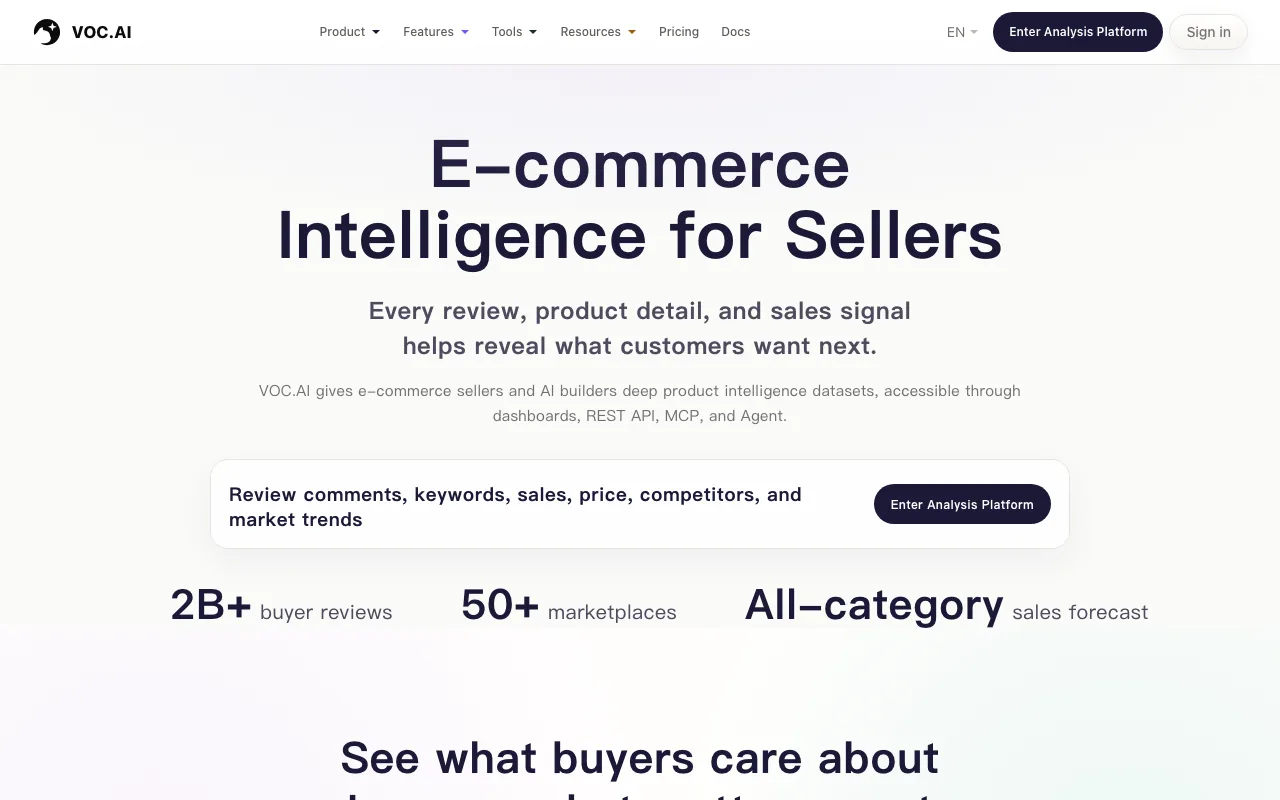 VOC.AI's home page. Screenshot: October 10, 2026.
VOC.AI (by Shulex) takes an ASIN and returns pain points, praise, use cases and complaints ranked by priority. It can also compare two ASINs side by side. Its home page now also lists a REST API, an MCP server and an agent.
Pros: a ready report per product; side-by-side comparison of two listings; 3 free analyses to try it.
Cons: it works per product listing, so research across Reddit, TikTok or review sites needs another tool.
Price: 3 deep review analyses for free, then from $99 a month.
Verdict: a good fit for one-product deep dives when you do not need other sources.
6. Apify: raw reviews to a spreadsheet
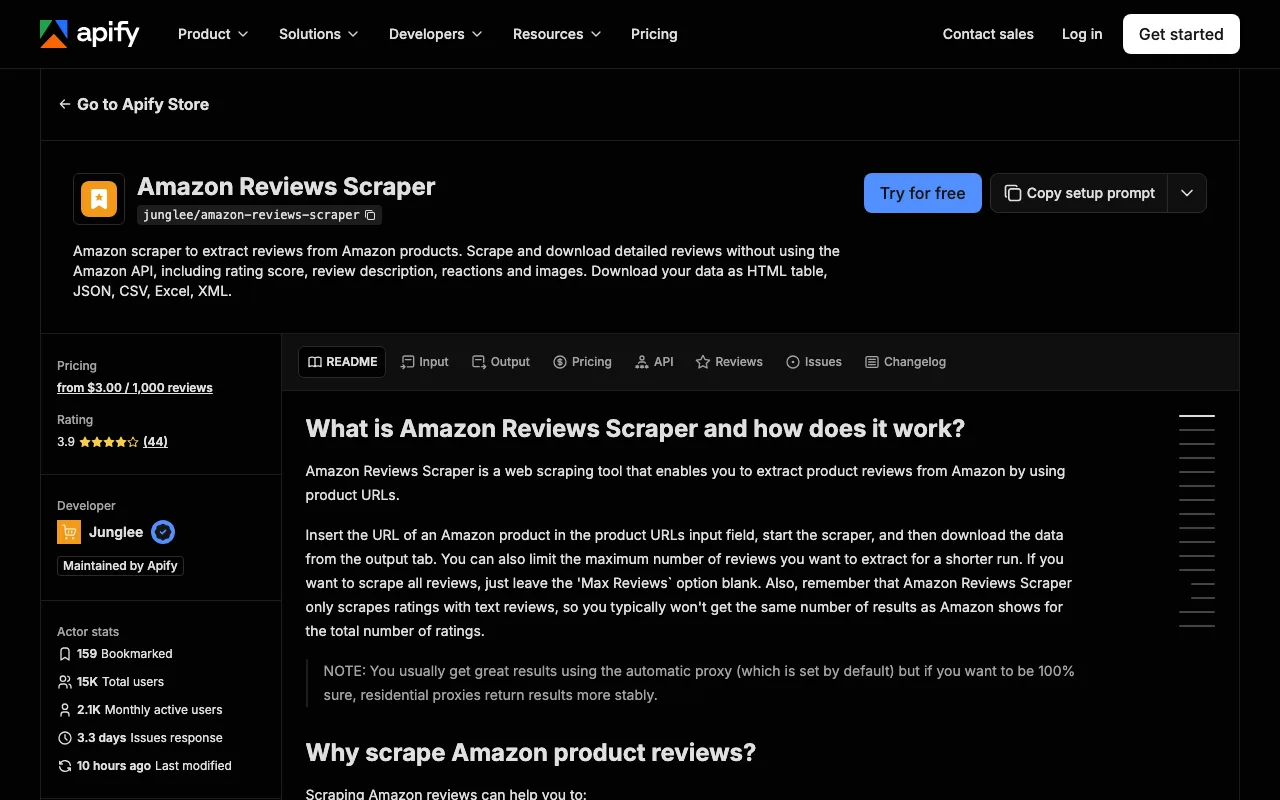 Apify's Amazon Reviews Scraper page. Screenshot: October 10, 2026.
The Amazon Reviews Scraper is the most used Amazon reviews tool in the Apify Store, with about 15,000 users. It exports each review's rating, text and images to CSV or JSON.
Pros: cheap; exports to CSV, JSON or Excel; no code needed.
Cons: no analysis, and it returns at most 100 reviews per star rating, about 500 per product.
Price: $6 per 1,000 reviews on Apify's free plan ($3 on the Business plan). The free plan includes $5 of usage a month.
Verdict: the cheapest way to get raw reviews into a sheet. You do the analysis.
7. Bright Data: raw reviews at scale
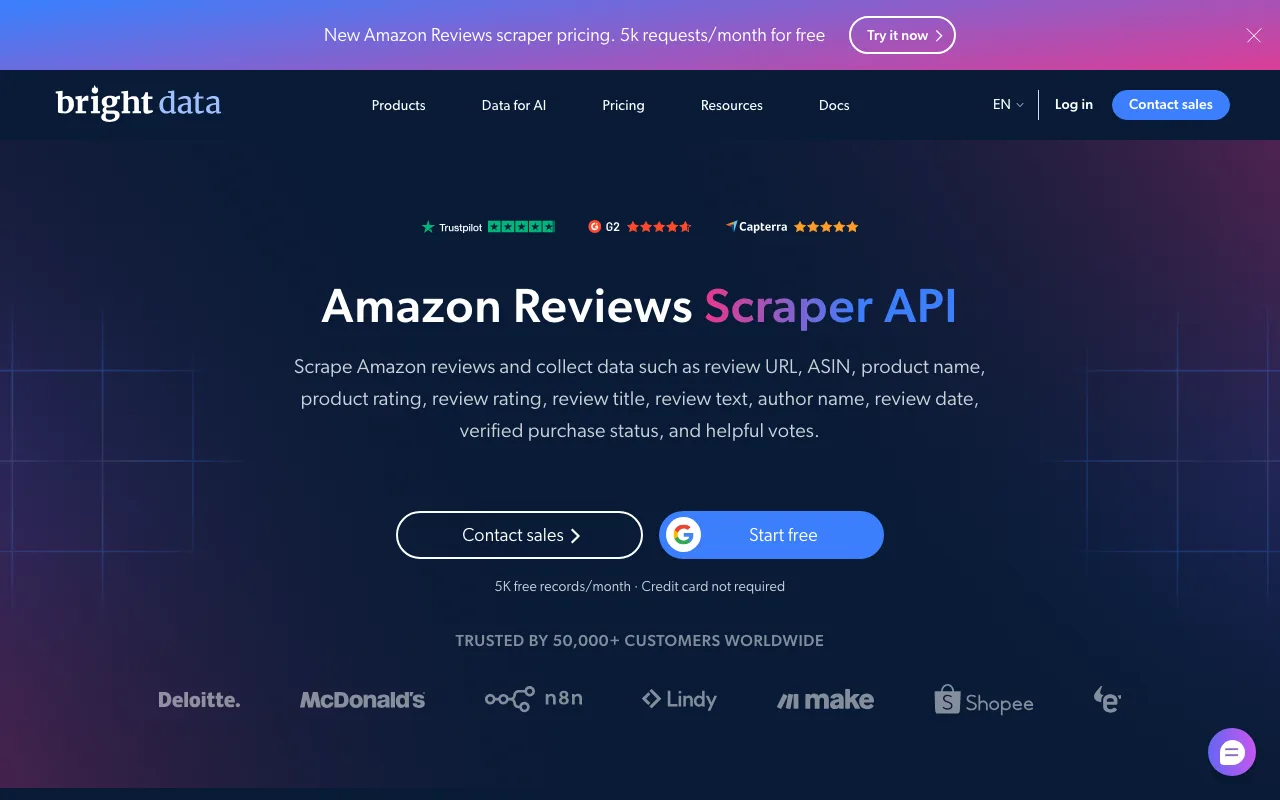 Bright Data's Amazon Reviews Scraper API page. Screenshot: October 10, 2026.
Bright Data's Amazon Reviews Scraper API returns review records for developers and data teams. A ready-made Amazon reviews dataset is also for sale.
Pros: built for volume; 5,000 free records a month; no credit card to start.
Cons: you get data, not answers. You need your own analysis, or an AI model, on top.
Price: $1.50 per 1,000 records on pay as you go, with 5,000 free records a month.
Verdict: for data teams pulling reviews at scale.
What about Fakespot and ReviewMeta?
Both were popular for checking fake reviews, and both are gone. Mozilla shut down Fakespot's website, extensions and apps on July 1, 2025. ReviewMeta's site no longer loads.
Which one should you pick?
- ✓You want a free first read of one product: Amazon's "Customers say", then Adlicio's free Amazon review analyzer.
- ✓You want complaints and buyer language for ads, landing pages and positioning: Adlicio.
- ✓You sell on Amazon and want review analysis next to product and keyword research: Jungle Scout or Helium 10.
- ✓You want ranked pain points for one product with a ready report: VOC.AI.
- ✓You want thousands of raw reviews for your own analysis: Apify or Bright Data.
FAQ
Can I analyze Amazon reviews for free? Yes. Read the "Customers say" summary on the product page, use Adlicio's free Amazon review analyzer, or try VOC.AI's 3 free analyses.
How many reviews should I read? For themes, 50 to 200 critical reviews usually show the main complaints. Read the 1 to 3 star reviews first, then the 4-star reviews with a "but".
Can I analyze a competitor's Amazon reviews? Yes, the reviews are public. Our guide on how to analyze competitor reviews walks through a real example step by step.
How did we choose these tools? Each one works today, helps you learn what Amazon buyers like and dislike, and shows its price publicly.

About the author
Daniel is the founder of Adlicio. He builds the scrapers behind it and uses them daily to turn customer comments and reviews into ad angles.